
Halswell Park Trust, Registered Charity No: 1054629. Patron Lady Gass, Lord Lieutenant of Somerset.
Website and images copyright Halswell Park Trust

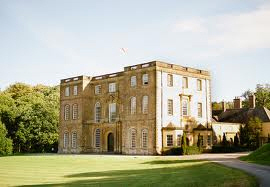
Halswell, a Grade I listed house and Grade II listed park, is situated in the village of Goathurst in Somerset. The estate has its origins in the eleventh century with the principal buildings today comprising a Tudor Manor dated from the mid-
Originally Halswell and the village of Goathurst were separate entities with the original family living here at least from Saxon times and taking their name from the spring that rises just to the east of the main house. Over the centuries the various lords purchased additional acres of lands, including much of Goathurst.
According to surviving receipts the Tudor house still existing today to the rear of the north range, was built in 1536 for Robert Halswell. Robert Halswell died in 1570 and left the estate to his son, Nicholas, who was then a minor.
The Halswell family played little recorded part in national affairs until Sir Nicholas Halswell became MP for Bridgwater in 1603. He died in 1633, leaving the house to his son Hugh, a clergyman. Dr Hugh Halswell had no male heirs and the estate passed, through his daughter Jane, to his grandson Halswell Tynte; Jane having married John Tynte of Chelvey, another wealthy Somerset Family.
Sir Halswell Tynte, created a baronet in 1674, rebuilt the north range, turning his mother’s attractive but workaday house into offices and dwarfing the old buildings with the construction of a great Palladian block, looking north towards the Bristol Channel. The new building was a sumptuous and stately edifice with much good design and expert craftmanship. Pevsner has described it as ‘the most important house of its date in the country’. A datestone over the door suggests that it was completed in 1689.
In 1702 Sir Halswell Tynte died and was succeeded by his son Sir John, who married the heiress of Sir Charles Kemeys and thus brought into the family the Glamorganshire seat of Cefn Malby. In 1710 Sir John Tynte died at the early age of 27. He was succeeded by his eldest son, Sir Halswell Tynte. In 1730 Sir Halswell Tynte purchased a quarter share of the lordship of the Manor of Goathurst, he died the same year. The estate passed to his brother John, who never married. Their youngest brother Sir Charles Kemeys Tynte (d 1785) succeeded to Halswell and Chelvey in 1740, acquiring Cefn Mably from his mother when she died in 1747.
Although never rich by the standards of the great Whig aristocracy of the day, Sir Charles could nevertheless afford to make substantial improvements to both houses and to sit as Tory MP for the county until 1774. The transformation of the landscape at Halswell was carried out during Sir Charles’s 44-
Sir Charles renovated the earlier formal garden in front of the house, naturalising the landscape and adorning it with ornamental structures. In doing so he was entirely in the spirit of the times. His landscape at Halswell reflected the various central pre-
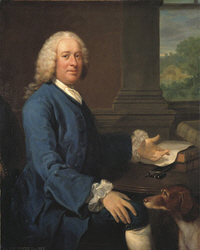
Sir Charles’s work at Halswell can be summarised as affecting three discrete aspects of the gardens and park: first, the immediate setting of the house, where the formal garden was removed and the ground naturalised; second, the Pleasure Grounds in Mill Wood, which were planted and embellished with new structures; and third, the wider park which was extended and planted.
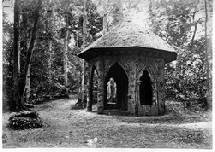
After this period of intensive change and re-
During the early years of the Second World War the Tudor buildings became the home to St Hilda’s school for girls and then, in the latter years, an area of the parkland became an Italian prisoner of war camp.
After the war the estate was a shadow of its former self. In the 1940s the National Trust was approached to take over the house, but much of the furniture and paintings had been sold and it declined the offer. In 1950 the estate was sold and split into several ownerships. The coach house and stables were converted into freehold residences and the house converted into flats. The ‘lawn’ on the east became a wilderness, with the Rotunda and grotto buried deep in saplings and undergrowth. By contrast the ancient oaks, chestnuts, ilex and sycamore in Mill Wood were cleared, many of the garden features were removed, with the rest left to decay and much of the park went under the plough.
Between 1950 and the present day, various elements of the house and park have been through a succession of different owners. In 1989 Country Life published a further article ‘Arcardia under the Plough’, charting the losses to date and hopes for the future.
In 1995 the Somerset Building Preservation Trust undertook the restoration of the Temple of Harmony, followed by Robin Hood’s Hut in 1997. The Temple of Harmony is now managed by the Halswell Park Trust and in 2000 the Landmark Trust took over the running of Robin Hood’s Hut, it is now offered as holiday accommodation.
Today the future of the house and park is once again uncertain. The house, having been the subject of an extensive restoration scheme by Mr Grahame Bond, is once again empty and deteriorating. The Temple of Pan and Arch Barn have been converted to private residential properties and the dire state of much of the remaining parkland remains a real concern.
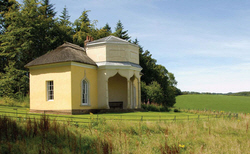
In 2012 Mill Wood was offered at open market value to the Halswell Park Trust and a project is underway to raise funds for the purchase and restoration.
Find out more about the Mill Wood Pleasure Garden Restoration Project.
Read more about the history of the Mill Wood campaign.